Los límites de un proyecto en videojuegos

English version here.

Cuando se habla de desarrollo de videojuegos, muchas veces leemos que la tasa de abandonos de proyectos es muy grande. Y es cierto; desarrollar un videojuego consiste en plantear un concepto básico y fundamental: se trata de un proyecto informático, que requiere de muchas horas de trabajo, dedicación, esfuerzo, y sacrificio. Llevar adelante un videojuego hasta completarlo, y que este videojuego tenga un aspecto y calidad suficientes como para atraer al público es una tarea muy compleja.

Son muchos los que suelen creer que un videojuego es preparar un pequeño proyecto en unos días, muchas veces basándose en prototipos, darle ciertos toques personales, subirlo a Steam, y empezar a ganar dinero. Obviamente se equivocan. De ahí que veamos la enorme cantidad de proyectos que se publican en Steam, y que son inmediatamente olvidados. Si realmente se desea destacar frente al resto, debemos crear un juego que sea divertido, atractivo, con una funcionalidad adecuada, y con un marketing suficiente como para que pueda ser visto entre tantos juegos que se publican a diario. Crear un juego en dos semanas que se basa en un prototipo o un ejemplo sacado de Internet no es hacer videojuegos, es querer aprovechar una oportunidad de ganar algo de dinero. Y el público de Steam lo sabe.

programmer

Continue reading “Los límites de un proyecto en videojuegos”
The scope of a video game project

Spanish version here.

When we talk about videogame development, we often read that the rate of project abandonment is very high. And it’s true; developing a videogame is about putting forward a basic and fundamental concept: it is a computer project that requires many hours of work, dedication, effort and sacrifice. To carry out a video game until it is complete, and that this videogame has a sufficient appearance and quality to attract the public is a very complex task.

There are many people who believe that a videogame is to prepare a small project in a few days, often based on prototypes, give it some personal touches, upload it to Steam, and start making money. They’re obviously wrong. That’s why we can see the huge number of projects that are published on Steam, and that are immediately forgotten. If you really want to stand out from the crowd, you need to create a game that is fun, attractive, with the right functionality, and with enough marketing to be seen among the many games that are published every day.

Creating a game in two weeks that is based on a prototype or an example taken from the Internet is not making videogames, it is wanting to take advantage of an opportunity to earn some money. And Steam’s audience knows it.

programmer

Continue reading “The scope of a video game project”

Math Classroom Challenge now in HTC Vive

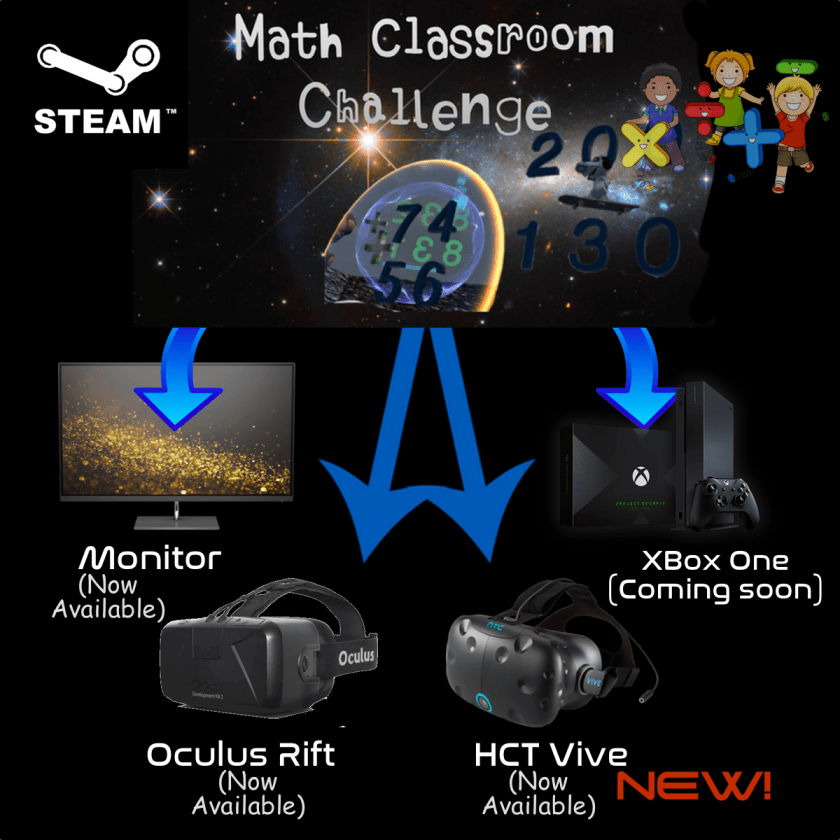
We’re happy to inform that Math Classroom Challenge is now compatible with HTC Vive.

With this new hardware, the same build is compatible with a standard monitor, Oculus Rift, and HTC Vive. We give the opportunity to choose your option when you run the game, or you can activate SteamVR in your Steam app so you can access to the VR version of the game automatically.

But this is far from over. We’ll be adding a new character next week: Sam. Sam is a bird that likes to eat the numbers you need to solve the math problems.

And a new scenario that will arrive soon. And will be quite different from the others. Thank you!

mclc_opciones

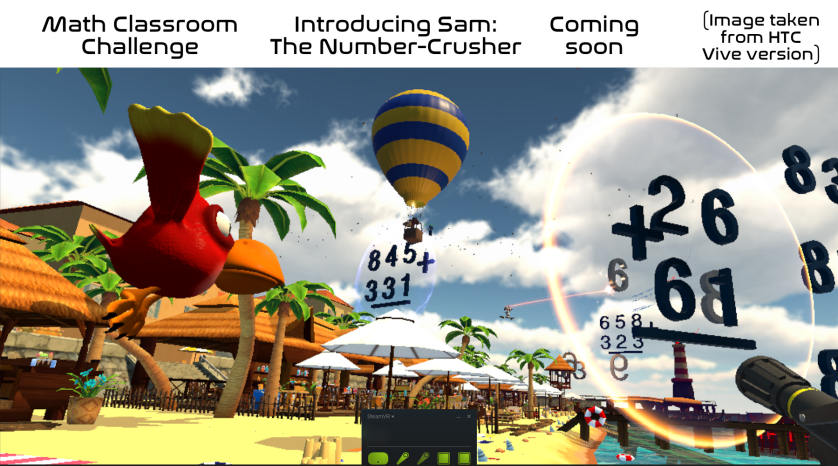
Introducing Sam, the Number-Crusher bird

We were talking the other day about an “almost enemy” for Math Classroom Challenge. This game is rated for children aged 4 onwards, and we must be careful with every new element added.

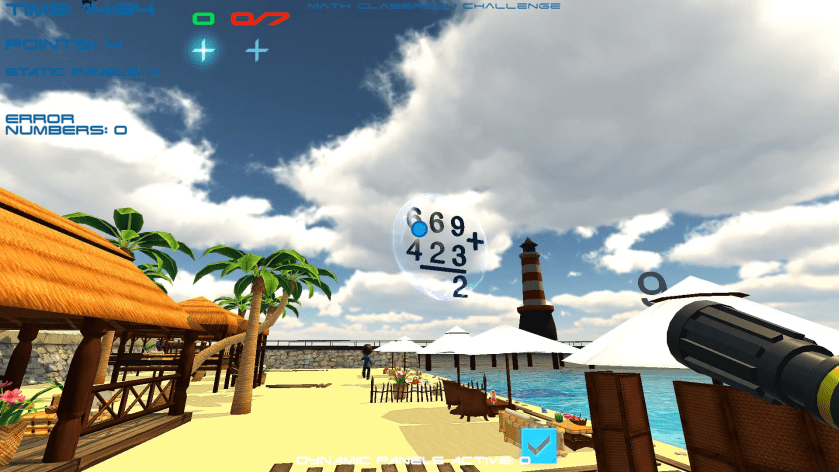
Some people asked us to add some “action” or “enemies”. Well, here it is. Sam is a bird that likes to eat numbers. When the player is behind a number, sometimes Sam can eat the number if the player does not wash Sam with water.

What do accomplish with this? We have an “enemy” but is completely harmless for children. There’s no violence at all, just the pressure to wash Sam. Of course Sam can be deactivated.

Sam will be available on July 6 with version 1.70 (version 1.60 with HTC Vive compatibility next June 30). Thank you for your interest!

Sam

Oculus Rift Vs HTC Vive: nuestra opinión (español)

English version here.

Hemos pasado un tiempo trabajando en la programación y adaptación de nuestro juego para Oculus Rift y HTC Vive. Originalmente el juego solo iba a funcionar en un monitor estándar, pero debido a unos trabajos que nos solicitaron para un proyecto, decidimos que merecía la pena, sin ninguna duda, incluir la posibilidad de poder jugar con gafas de realidad virtual.

Estas conclusiones que se comentan a continuación son totalmente personales y subjetivas, y no pretenden demostrar nada ni afirmar nada. Simplemente, son el fruto de semanas de trabajo intenso con las gafas, usándolas para las pruebas y verificaciones.

Por ejemplo, debido a estas pruebas, teníamos que sacarnos y ponernos las gafas constantemente. Esto ha dado pie a poder valorar aspectos tan concretos como la facilidad de colocación y uso. Vamos pues a ver algunas ideas generales sobre las dos gafas de realidad virtual.

Oculus-Rift-vs-HTC-Vive

Continue reading “Oculus Rift Vs HTC Vive: nuestra opinión (español)”

Oculus Rift vs HTC Vive: our impressions

Spanish version here.

We have spent some time working on the programming and adaptation of our game for Oculus Rift and HTC Vive. Originally the game was only going to work on a standard monitor, but due to some circumstances we were asked to do on a project, we decided that it was definitely worth it to include the possibility of playing with virtual reality glasses.

These conclusions that are commented on below are totally personal and subjective, and are not intended to demonstrate anything or to affirm anything. They are simply the result of weeks of hard work with the glasses, using them for testing and verification.

For example, because of these tests, we had to take off and put on our glasses all the time. This has allowed us to assess aspects as specific as the ease of placement and use. So let’s look at some general ideas about the two virtual reality glasses.

Oculus-Rift-vs-HTC-Vive

Continue reading “Oculus Rift vs HTC Vive: our impressions”

A sort of “enemies” for Math Classroom Challenge

Some people have commented that Math Classroom Challenge is maybe too childish. And they’re right. The reason for this is that the game is rated for children from the age of four. In these age ranges, extreme caution and awareness of the visual and interactive elements of a game should be exercised. Even if Steam’s store approved the game for us, it wouldn’t be done by the kids’ parents, tutors and teachers.

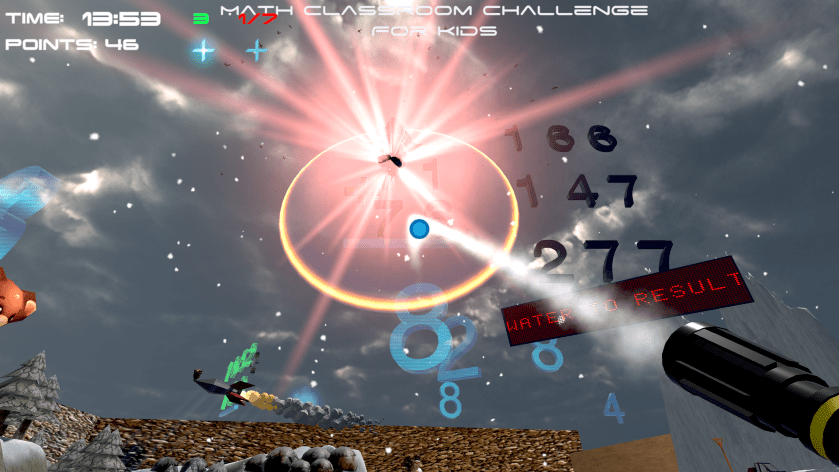
But we understand the feedback you’ re giving us, and we’re going to apply a solution that, without affecting the current game, can create greater challenges for older kids and adults. We are going to add enemies, but beware, they will not be elements that attack the player or similar things. They will be elements that will simply chase after the numbers we need to solve the exercises, and will “eat” them, so to speak. The player must throw water at that element to make it disappear, and this will also give him points.

We believe that this addition, which will be optional and can be activated and deactivated, will allow more options in the game and a greater variety, as well as being a new challenge for the game.

This week we’ll add the HTC Vive compatibility, and we’l try to add this feature at the same time. If it is not possible, this feature will arrive in a few days.

And, of course, we are always open to new ideas and suggestions. Thank you very much for your support.

math_classroom_challenge
Math Classroom Challenge

HTC coming to Math Classroom Challenge this week

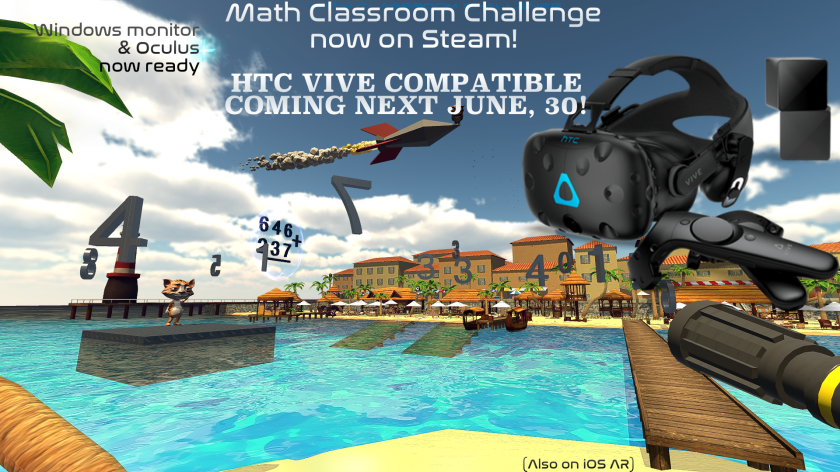
Right now Math Classroom Challenge on Steam can be played with a standard monitor or Oculus goggles. From next Saturday, June 30th, we will also incorporate full compatibility with HTC Vive.

The player will be able to play with HTC Vive’s own controls or with a pad, and choose either of the two devices. Without forgetting the keyboard of course.

We’re working on the final tests. Thank you very much for your support!

promo1

Videojuegos: cuando jugar y aprender es divertido (versión español)

English version here.

Los juegos educativos han existido desde el principio de los tiempos de la informática. Juegos cuya finalidad principal es la de la enseñanza, permitiendo que el alumno adquiera una serie de conocimientos y habilidades en base a un software que le permite analizar su destreza, mejorarla, y obtener un resultado final.

Pero, demasiadas veces, los juegos educativos son demasiado educativos. ¿Qué quiere esto decir? Están muy centrados en el componente formativo, dejando de lado el componente lúdico. Esta característica de este tipo de juegos conlleva que el uso de estos programas se convierta, en muchos aspectos, en una extensión de una clase de matemáticas, o de física. Tenemos pizarras virtuales, con problemas virtuales, que se resuelven como en clase: con una tiza virtual, y con un resultado que es una puntuación de los ejercicios resueltos.

Este planteamiento no es negativo, pero es importante ir más allá de la idea de crear extensiones de una clase de matemáticas o de física. Y ahí es donde aparecen juegos que son muy similares, cuando no iguales, a cualquier videojuego que podamos imaginar, pero que,  en su interior, contienen elementos que permiten el desarrollo del conocimiento del jugador. A esto se le llama fusionar jugador y alumno, de tal modo que ambos, el que juega, y el que aprende, son el mismo individuo.

Somos muchos los que hemos aprendido con juegos que, en principio, no tienen la etiqueta oficial de educativos, aunque todos sabemos que lo son. Pongo tres ejemplos. La saga Civilization sería el primero. ¿Cuánta historia hemos aprendido con esta saga? El segundo sería la saga Sim City, o su derivado actual, Cities: Skylines, donde aprendemos todos los aspectos del desarrollo de una ciudad. Y el tercero es uno que me toca especialmente: los simuladores de vuelo. ¿Cuántas personas que empezaron con el Flight Simulator y otros simuladores han terminado siendo pilotos profesionales? Yo conozco unos cuantos.

Debemos buscar nuevas fuentes de aprendizaje, basadas en el juego tradicional de PC y de consola, fusionado con elementos educativos. La pizarra virtual es muy importante, pero, ¿por qué quedarnos ahí? Podemos crear juegos divertidos, emocionantes, en tres dimensiones, con buenos gráficos y sonido, que además tengan un componente formativo y educativo importante.

Ese es nuestro cometido. Y en esa tarea estamos implicados. Aprender sin saber que estás aprendiendo. Ese es nuestro lema. Y deseamos que lo sea para miles de jóvenes en todo el mundo. Muchas gracias.

math_classroom_challenge_windows